
If you enjoy puzzle games that reward curiosity, Little Alchemy 2 offers a simple idea that can keep you experimenting for hours. You begin with four basic elements—air, water, earth, and fire—and combine them to discover new objects, materials, creatures, and concepts. A simple experiment can lead to an unexpected discovery, and that discovery can become the ingredient for something even more interesting.
However, as your collection grows, finding the right combinations becomes more challenging. You might know how to create steam or mud but struggle to unlock life, humans, technology, or other advanced items. That’s where a reliable Little Alchemy 2 guide can help you progress without removing all the fun of experimentation.
In this guide, you’ll learn the best combinations to try first, useful crafting strategies, ways to uncover hidden discoveries, and common mistakes to avoid. Whether you’re a beginner or trying to complete more of your collection, these tips will help you make better use of every element.
What Is Little Alchemy 2?
Little Alchemy 2 is a crafting puzzle game developed by Recloak. You start with four elements and combine two items at a time to create new discoveries. The process is easy to understand, but the possible crafting paths become increasingly complex as you progress.
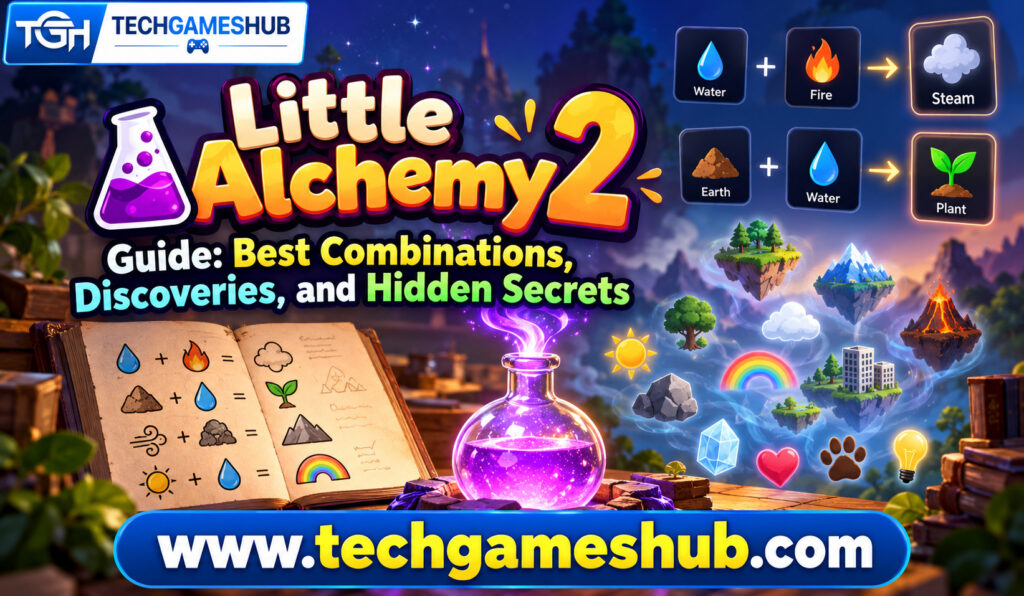
For example, combining water and fire creates steam. Combining earth and water produces mud. You can then use these newly discovered items in additional recipes, gradually building a much larger collection.
The game rewards experimentation rather than quick reactions. There are no enemies to defeat or complicated levels to master. Your main objective is to explore relationships between items and discover as many valid combinations as possible.
How the Combination System Works
Every combination uses two items, and the result depends on the game’s available recipes. Sometimes, the logic follows real-world relationships. Other times, the game uses imaginative associations, wordplay, or unexpected connections.
For instance, combining water with earth produces mud, while combining earth with earth creates land. Once you discover an item, you can reuse it in other combinations.
Not every experiment creates something new. Some combinations produce no result, and certain items become available only after you reach particular milestones. Understanding these rules makes your exploration more efficient.
Best Little Alchemy 2 Combinations for Beginners
Your first goal should be to expand your collection with useful foundational items. These discoveries can help you create materials, landscapes, weather conditions, and more advanced objects.
Essential Starter Combinations
Try these combinations early in your game:
| Combination | Result |
| Water + Fire | Steam |
| Earth + Water | Mud |
| Earth + Air | Dust |
| Fire + Air | Smoke |
| Fire + Earth | Lava |
| Air + Air | Pressure |
| Fire + Fire | Energy |
| Earth + Earth | Land |
| Water + Water | Puddle |
| Water + Air | Mist |
| Fire + Mud | Brick |
| Water + Lava | Obsidian |
These recipes provide a strong foundation for further discoveries. For example, steam can help you create a geyser, while lava can be combined with earth to produce a volcano.
Build More Complex Items From Basic Materials
Once you’ve unlocked a few essential elements, start combining your discoveries with one another. This approach is more productive than repeatedly trying random pairs.
Some useful next steps include:
- Stone: Combine earth and pressure.
- Sand: Combine air and stone.
- Metal: Combine fire and stone.
- Glass: Combine fire and sand.
- Clay: Combine mud and stone.
- House: Combine wall with wall.
- Ocean: Combine water with sea.
These items open up additional crafting possibilities. Metal can lead to tools and machines, glass can contribute to scientific objects, and a house can become part of combinations involving villages, gardens, and other structures.
How to Make Life, Plant, and Human in Little Alchemy 2
Some discoveries are more valuable than others because they unlock entire groups of new combinations. Life, plant, and human are particularly useful examples.
How to Make Life
Life is one of the most important discoveries in the game because it opens the door to animals, humans, and other living things.
One confirmed recipe is:
Volcano + Primordial Soup = Life
You can create primordial soup by combining lava and sea. To follow this route, work through the following sequence:
- Combine fire and earth to make lava.
- Create a sea by combining water with a lake.
- Combine lava and sea to make primordial soup.
- Combine primordial soup with a volcano to discover life.
How to Make Plant
Plants introduce a wide range of possibilities, including gardens, forests, flowers, and agricultural items.
A useful recipe is:
Life + Soil = Plant
To make soil, combine earth and life. Once you have plant, experiment with other materials to see which natural and human-made objects you can discover.
For example, combining plant with house creates a garden, while combining earth with plant creates grass. These discoveries help you build a larger collection of nature-related elements.
How to Make Human
Human is another valuable item because it connects to professions, tools, relationships, and cultural concepts.
Rather than guessing every possible recipe, use the official hints page to check the currently supported ways to make human. Once you unlock it, experiment with combinations involving metal, animals, tools, and other useful elements.
The key strategy is to prioritize items that have many potential uses instead of focusing only on rare discoveries.
Hidden Secrets and Advanced Discoveries
The fun of Little Alchemy 2 isn’t limited to obvious recipes. Some of the most interesting discoveries emerge when you combine items from different categories.
Explore Unexpected Combinations
Try combining natural elements with technology, living things with objects, or familiar items with abstract concepts. A combination that seems unusual may still produce a valid discovery.
For example, combining metal and life creates a robot. Combining rainbow and horse creates a unicorn. These recipes demonstrate how the game blends familiar relationships with fantasy.
You should also try combining an item with itself. The official guide recommends this strategy because some useful discoveries follow that pattern. For example, wall plus wall creates a house.
Unlock Time Through Progress
Time is a special discovery because it isn’t unlocked through an ordinary combination. It becomes available after you discover 100 items, including the starting elements.
This makes steady progress important. Instead of repeatedly searching for one difficult recipe, explore different categories until you reach the required milestone.
Once time is available, test it with existing items. Time can contribute to additional discoveries, making it a useful addition to your collection.
Discover Magic and Mythical Creatures
You can create several imaginative items using combinations that involve magic, animals, and other discoveries.
For example:
- Magic: Life + Rainbow
- Double Rainbow!: Rainbow + Rainbow
- Unicorn: Rainbow + Horse
- Butterfly: Rainbow + Animal
These recipes offer a fun way to explore the game’s fantasy side. However, remember that some mythical items belong to additional content packs rather than the standard browser experience.
The Myths and Monsters content pack includes more than 100 additional items and is available through the mobile apps. It is a separate, paid content pack, so you shouldn’t assume its recipes are available in the standard browser game.
Smart Strategies for Discovering More Items
You can make faster progress without relying on a complete list of cheats. A little organization helps you avoid repeated experiments and identify promising combinations.
Work Through Categories
Focus on one group of items at a time. For example, start with natural elements, move into plants and animals, and then explore technology or buildings.
This approach helps you recognize relationships between discoveries. If you’ve just created glass, you can test it with metal, sand, water, and other materials before moving on to a completely unrelated category.
Keep Track of Your Experiments
Use these simple habits to make your research more effective:
- Reuse newly discovered items in combinations with older discoveries.
- Test duplicate items, such as water plus water or wall plus wall.
- Prioritize versatile items such as life, plant, human, metal, and tools.
- Check an official hint when you have exhausted reasonable possibilities.
Use Hints Without Spoiling Everything
If you’re stuck, the official Little Alchemy 2 hints website is a reliable place to find recipes. You can search for specific items rather than reading a complete walkthrough from beginning to end.
This approach preserves some of the puzzle-solving experience. Look up one missing discovery, return to the game, and experiment with the result.
Common Mistakes to Avoid
One common mistake is assuming every combination must follow real-world science. Although many recipes use familiar logic, others rely on imaginative connections or wordplay.
Another mistake is trying too many random combinations without paying attention to previous discoveries. Instead, consider what an item represents and what it might logically interact with.
You should also avoid assuming every item can be combined with something else. Some discoveries have limited uses, and others may not produce additional results. The game’s encyclopedia can help you keep track of what you’ve already unlocked.
Finally, remember that Little Alchemy and Little Alchemy 2 are different games. A recipe from the original game may not work in the sequel. Always check that your guide matches the version you’re playing.
Frequently Asked Questions
1. What Are the Four Starting Elements in Little Alchemy 2?
You begin with air, water, earth, and fire. Combining these four elements allows you to create materials, weather conditions, living things, and many other discoveries.
2. What Is the Best Combination to Try First?
Water plus fire is a useful starting point because it creates steam. Earth plus water creates mud, while earth plus air creates dust. These early discoveries help you expand your collection.
3. How Do You Unlock Time in Little Alchemy 2?
Time becomes available after you discover 100 items, including the starting elements. You don’t unlock it by combining two ordinary items.
4. How Can You Find Hidden Recipes?
Experiment with different categories, try combining an item with itself, and reuse newly discovered elements. If you remain stuck, consult the official Little Alchemy 2 hints website for specific recipes.
5. Is Little Alchemy 2 Free to Play?
You can play Little Alchemy 2 through its official website for free. However, additional content packs, such as Myths and Monsters, are separate purchases available through the mobile apps.
Conclusion
Little Alchemy 2 turns simple combinations into an ongoing discovery puzzle. Starting with air, water, earth, and fire, you can gradually create materials, plants, animals, technology, and imaginative items by experimenting with different recipes.
The best way to progress is to focus on versatile discoveries such as life, plant, metal, and human. Explore one category at a time, test unexpected combinations, and use hints only when you need help moving forward.
Whether you’re trying to discover your first hundred items or complete a much larger collection, patience and curiosity are your most useful tools. Start with the basic recipes in this guide, experiment with every new discovery, and see how far your creativity can take you.