















ECHO: How Artificial Intelligence Copies Player Behavior
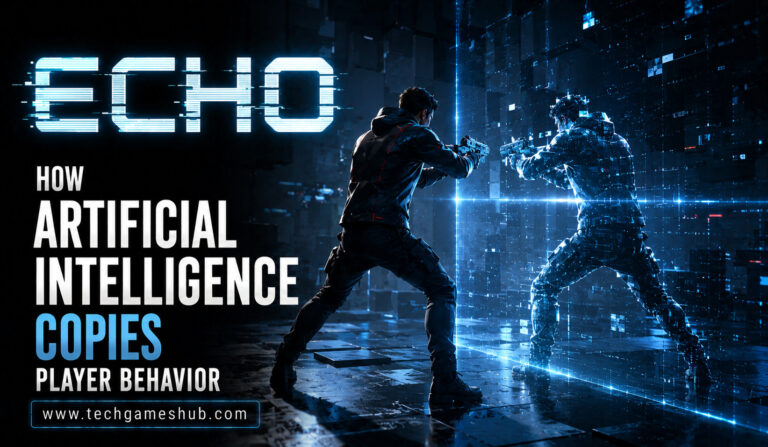
ECHO is a fascinating science-fiction game built around one unsettling idea: what if the enemy could learn from the way you play? Developed by Ultra Ultra, ECHO places players in the role of En, a mysterious protagonist exploring an ancient and technologically advanced structure. The game combines stealth, exploration, and action, but its most memorable …
ECHO: How Artificial Intelligence Copies Player BehaviorRead More
Spore: Exploring the Idea of AI-Driven Evolution in Gaming
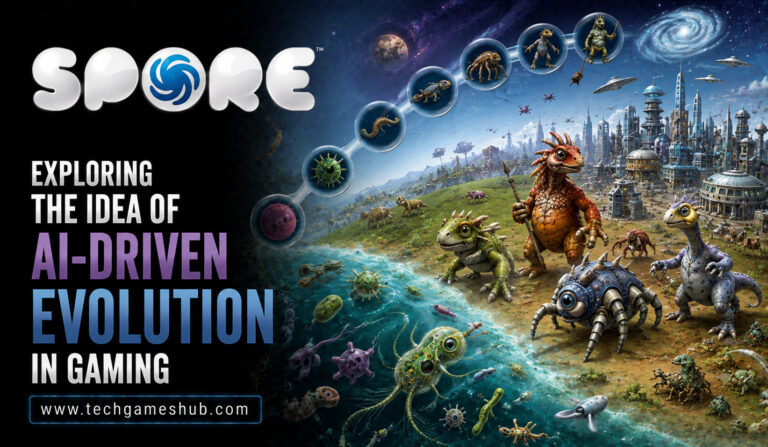
Spore is one of the most ambitious examples of evolutionary game design. Released by Maxis, the game allows players to begin with a microscopic organism and gradually guide it through multiple stages of development until it becomes part of a civilization capable of exploring space. What makes Spore particularly interesting from a technology perspective is …
Spore: Exploring the Idea of AI-Driven Evolution in GamingRead More
Noita: How Procedural Physics Creates Unexpected Gameplay
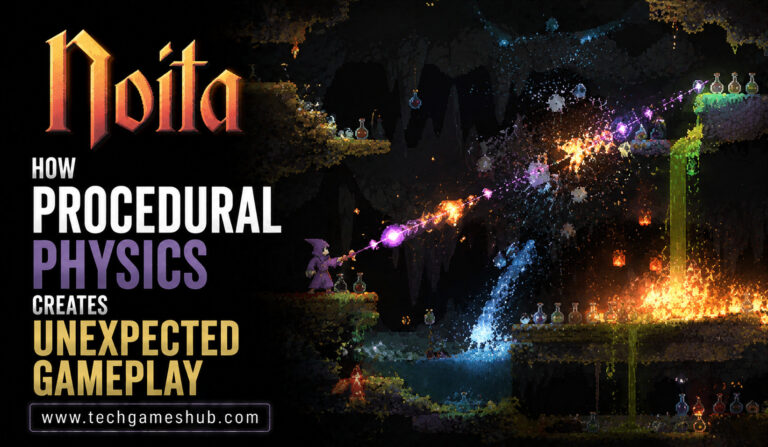
Noita is a game that turns physics into one of its most important gameplay systems. Developed by Nolla Games, this roguelike action title drops players into a dangerous world where environments, materials, spells, enemies, and destruction can interact in surprising ways. At first, Noita may look like a traditional pixel-art action game. The player explores …
Noita: How Procedural Physics Creates Unexpected GameplayRead More
Baldur’s Gate 3: How Character Systems Create Personalized Stories
Baldur’s Gate 3 is one of the clearest examples of how modern role-playing games can use interconnected character systems to create stories that feel personal to each player. Instead of forcing everyone through exactly the same narrative, the game allows decisions, relationships, abilities, backgrounds, and companion personalities to influence how events unfold. Developed by Larian …
Baldur’s Gate 3: How Character Systems Create Personalized StoriesRead More
Hades: How Dynamic Characters Improve Replayability
Hades is one of the strongest examples of how character design can make a game feel fresh even when players repeatedly return to the same basic gameplay loop. Developed by Supergiant Games, the action roguelike follows Zagreus as he repeatedly attempts to escape the Underworld. On paper, repeating the same journey after every death could …
Hades: How Dynamic Characters Improve ReplayabilityRead More
Returnal: How Procedural Technology Changes Every Run
Returnal is a game built around repetition, uncertainty, and adaptation. Developed by Housemarque, the sci-fi action game places players in the role of Selene, an astronaut trapped on the alien planet Atropos. Every time she dies, the world changes, forcing her to explore familiar environments under different circumstances. This structure is powered by procedural technology. …
Returnal: How Procedural Technology Changes Every RunRead More
Outer Wilds: How Simulation and Exploration Work Together
Outer Wilds is one of the most remarkable exploration games because it makes knowledge more important than traditional character progression. Instead of constantly giving players better weapons, stronger equipment, or higher statistics, the game encourages them to understand a mysterious solar system and use that knowledge to uncover its secrets. At the heart of the …
Outer Wilds: How Simulation and Exploration Work TogetherRead More
The Stanley Parable: How Game Systems React to Player Decisions
The Stanley Parable is one of the most creative examples of interactive storytelling in modern video games. Instead of focusing on combat, progression, or traditional challenges, the game revolves around a much simpler idea: what happens when the player refuses to do what the game expects? You play as Stanley, an office worker who discovers …
The Stanley Parable: How Game Systems React to Player DecisionsRead More
Creatures of Ava: Exploring AI-Like Animal Behavior
Creatures of Ava is an adventure game that puts animals at the center of its gameplay. Rather than presenting creatures as simple collectibles or enemies, the game focuses on observing, interacting with, rescuing, and understanding them. This approach creates an experience where animal behavior becomes an important part of exploration. Set on the mysterious planet …
Creatures of Ava: Exploring AI-Like Animal BehaviorRead More
Rain World: How Artificial Ecosystems Create Unpredictable Gameplay
Rain World is one of the most unusual survival games ever created. At first glance, its pixel-art visuals and simple-looking protagonist may suggest a traditional platforming adventure. But underneath that visual simplicity is a complex simulated ecosystem where creatures hunt, compete, flee, explore, and interact with one another. Instead of designing every enemy encounter around …
Rain World: How Artificial Ecosystems Create Unpredictable GameplayRead More