Flight simulation has evolved far beyond simply controlling an aircraft and following a runway. Modern simulators can reproduce everything from aircraft systems and weather conditions to realistic weapons, navigation, communication, and combat environments. Among the most advanced examples is DCS World, a flight simulation platform known for its detailed aircraft, realistic physics, and highly immersive military aviation experience.
Digital Combat Simulator, commonly called DCS World, combines sophisticated flight modeling with interactive cockpits, large environments, multiplayer missions, and combat scenarios. It is designed for players who want more than arcade-style flying and are interested in understanding how aircraft operate in demanding situations.
What Makes DCS World Different?
The biggest difference between DCS World and many traditional flight games is its focus on simulation depth. Instead of simplifying aircraft controls, DCS World attempts to reproduce the behavior and systems of individual aircraft in considerable detail.
Each aircraft can have its own flight characteristics, cockpit layout, avionics, weapons systems, sensors, and operating procedures. This means learning one aircraft does not necessarily mean you have learned every aircraft in the simulator.
For newcomers, this depth can initially seem complicated. However, it is also what makes the platform appealing to aviation enthusiasts and experienced simulation players. Flying successfully can feel like an achievement because the player needs to understand the aircraft rather than simply memorize a few controls.
Advanced Flight Modeling Technology
At the heart of DCS World is its flight simulation technology. Aircraft behavior is influenced by factors such as speed, altitude, weight, aerodynamic forces, engine performance, and control inputs.
A small change in how an aircraft is flown can affect its performance. Pulling too aggressively, entering a turn at an unsuitable speed, or carrying a heavy weapons load can change how the aircraft responds.
This approach creates a more authentic flying experience. Players need to consider energy management, aircraft limitations, approach speeds, and other aspects of aviation that simplified games often ignore.
The result is a learning curve that can be steep but rewarding. Once players become comfortable with an aircraft, its controls and flight characteristics can become much more intuitive.
Highly Detailed Aircraft Systems
One of the most impressive elements of DCS World is its emphasis on aircraft systems. Modern military aircraft contain sophisticated avionics, radar systems, navigation equipment, weapon controls, communications technology, and defensive systems.
DCS World attempts to represent these systems as interactive parts of the aircraft experience.
In many modules, players can operate switches, buttons, displays, and other cockpit controls. Rather than relying entirely on simplified menus, the simulator encourages pilots to interact with the cockpit itself.
This creates an important distinction between learning to fly and learning to operate an aircraft. A player might understand basic flight controls but still need to learn how to configure navigation, manage sensors, select weapons, or prepare the aircraft for different missions.
Realistic Cockpit Interaction
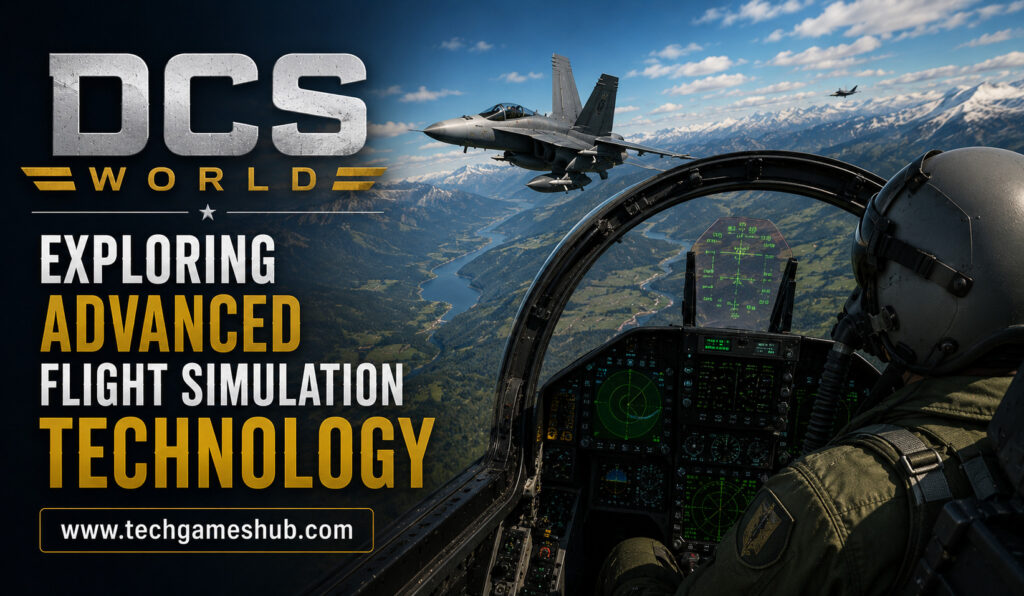
The cockpit is effectively the player’s command center. DCS World places considerable emphasis on making cockpits functional and visually detailed.
Interactive cockpit controls allow players to perform tasks through switches, panels, displays, and other interfaces. This becomes particularly interesting when flying aircraft with advanced avionics.
For example, a modern fighter may require the pilot to manage multiple displays while monitoring navigation, sensors, communications, and aircraft status. These tasks create a much more involved experience than simply pointing an aircraft toward a target.
The detailed cockpit environment also works well with hardware such as HOTAS systems, head tracking, and virtual reality devices.
Combat Simulation and Mission Technology
Despite its name, DCS World is not simply an aircraft control simulator. Combat is a major part of the platform, and missions can involve air-to-air engagements, air-to-ground attacks, reconnaissance, navigation, and coordinated operations.
Weapons are integrated with aircraft systems rather than functioning as simple point-and-click tools. Players may need to understand targeting procedures, weapon characteristics, sensor information, and engagement conditions.
Mission environments can also include ground units, ships, aircraft, air defenses, and other elements. This creates a battlefield where different systems interact.
The technology behind these interactions helps turn individual flights into larger tactical scenarios.
Weather and Environmental Simulation
Environmental conditions can dramatically change a flight. DCS World incorporates weather and atmospheric factors that can influence visibility and aircraft operations.
Clouds, wind, temperature, turbulence, and visibility can affect how a pilot approaches a mission. Flying during clear conditions can be very different from operating in poor weather.
This environmental simulation adds another layer of realism. Players cannot always depend on perfect visibility or predictable conditions, making navigation and situational awareness more important.
Night operations are another example of how environmental conditions can change gameplay. Reduced visibility forces pilots to depend more heavily on instruments, sensors, and navigation systems.
AI and Dynamic Battlefield Behavior
Artificial intelligence also plays an important role in DCS World. Computer-controlled aircraft and ground units can participate in missions, respond to situations, and create threats for the player.
AI opponents can make combat scenarios more dynamic because the player is not simply following a fixed sequence of events. Aircraft may engage targets, defend positions, or react to mission conditions.
The quality of AI behavior can influence the overall simulation experience, particularly during large combat scenarios. It provides a way to practice tactics and procedures without requiring a full multiplayer group.
Mission Creation and Customization
Another major strength of DCS World is its mission-building ecosystem. Players can create customized scenarios rather than relying only on pre-designed missions.
Mission creation tools allow users to construct situations involving different aircraft, objectives, locations, weather conditions, and opposing forces. This flexibility has helped create a large community focused on designing and sharing unique scenarios.
For advanced users, mission building becomes almost another part of the simulation. Instead of only flying missions, players can design training exercises, combat scenarios, cooperative operations, and other experiences.
Multiplayer and Cooperative Simulation
Modern flight simulation is increasingly social, and DCS World supports multiplayer experiences where players can operate together.
Cooperative missions can involve different roles within the same operation. One player might focus on air-to-air combat while another performs ground attacks, reconnaissance, or support duties.
This creates opportunities for teamwork and communication. Multiplayer can also make realistic procedures more meaningful because coordination becomes part of the experience.
For aviation enthusiasts, participating in organized multiplayer operations can provide a level of immersion that is difficult to reproduce in single-player gameplay.
Virtual Reality and Flight Hardware
DCS World is particularly well suited to advanced simulation hardware. A basic keyboard and mouse can be used, but dedicated equipment can significantly enhance the experience.
HOTAS controllers provide physical buttons and switches for important aircraft functions. Head tracking allows players to look around the cockpit naturally, while virtual reality can place them directly inside the simulated aircraft.
With VR, the sense of scale becomes especially important. Looking around a cockpit, checking instruments, and visually tracking another aircraft can feel considerably more natural.
These technologies demonstrate how modern gaming hardware and software can work together to create immersive simulation environments.
The Learning Curve of DCS World
The realism of DCS World is both its greatest strength and its biggest challenge. New players may find the controls, terminology, and procedures overwhelming at first.
Learning an aircraft can require patience. Players may need to study cockpit layouts, understand basic systems, practice takeoffs and landings, and gradually learn more advanced combat or navigation procedures.
However, this progression gives the simulator a strong sense of achievement. Successfully completing a difficult flight after hours of practice feels different from winning a conventional arcade-style game.
The learning process itself becomes part of the entertainment.
Why Flight Simulation Technology Matters
DCS World demonstrates how far interactive simulation technology has developed. Modern computers can process detailed aircraft physics, large environments, artificial intelligence, weather systems, and complex interactions within the same experience.
More importantly, simulation technology can transform gaming into a form of interactive learning. Players develop an understanding of navigation, aircraft systems, situational awareness, and decision-making while engaging with a digital environment.
It does not replace real-world aviation training, but it can provide a valuable and accessible way to explore aviation concepts.
The Future of Advanced Flight Simulation
The future of flight simulation is likely to involve even more detailed environments, improved AI, better virtual reality, and increasingly sophisticated aircraft systems.
Artificial intelligence could make computer-controlled pilots and battlefield units more responsive. Improved graphics technology can create more realistic landscapes and weather. VR hardware may become more comfortable and affordable, making immersive cockpits easier to access.
DCS World represents an important part of this evolution because it demonstrates that players are willing to invest time in complex and realistic simulation experiences.
Conclusion
DCS World stands out because it treats flight simulation as more than a conventional video game. Its detailed aircraft systems, advanced flight modeling, interactive cockpits, combat environments, weather simulation, AI, multiplayer features, and hardware support create a deeply immersive aviation experience.
Its complexity may not appeal to everyone, but for players interested in military aviation and realistic flight technology, that complexity is exactly what makes it compelling.
As gaming hardware and simulation technology continue to advance, platforms like DCS World show how digital environments can recreate increasingly sophisticated forms of real-world interaction. For anyone fascinated by aircraft, technology, and realistic virtual experiences, DCS World offers a remarkable look at what modern flight simulation can achieve.